


Welcome to Cape Town
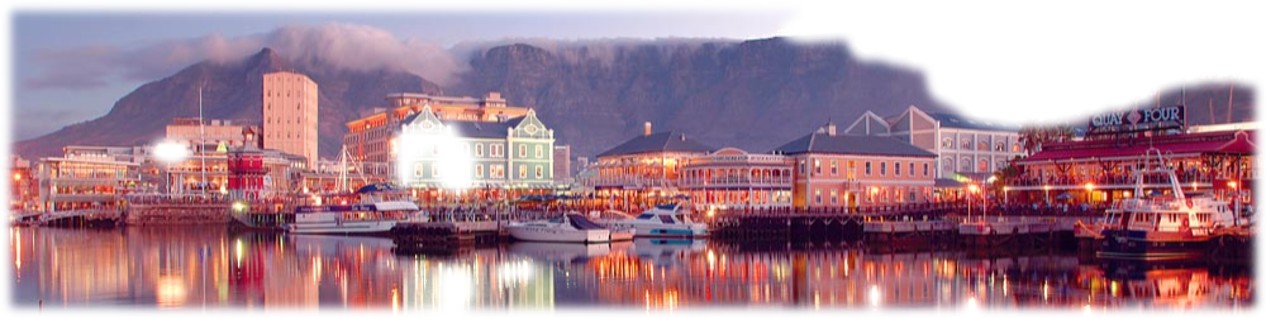
Nestled between the iconic Table Mountain and the sparkling waters of the Atlantic Ocean, Cape Town is one of the world’s most breathtaking and vibrant destinations. Known as the “Mother City” of South Africa, Cape Town offers visitors a unique blend of natural beauty, rich cultural heritage, and world-class hospitality.
From the historic charm of Robben Island to the colourful streets of Bo-Kaap, the city tells a powerful story of resilience, diversity, and innovation. Visitors can explore pristine beaches, renowned vineyards in nearby Stellenbosch and Franschhoek, vibrant markets, and an exceptional culinary scene that reflects the many cultures that call Cape Town home.
Whether you are here for a conference, research collaboration, or simply to experience the beauty of the Cape, we hope you will take time to explore the city’s remarkable landscapes, rich biodiversity, and warm local spirit.
We warmly welcome you to Cape Town and wish you an inspiring and memorable stay.
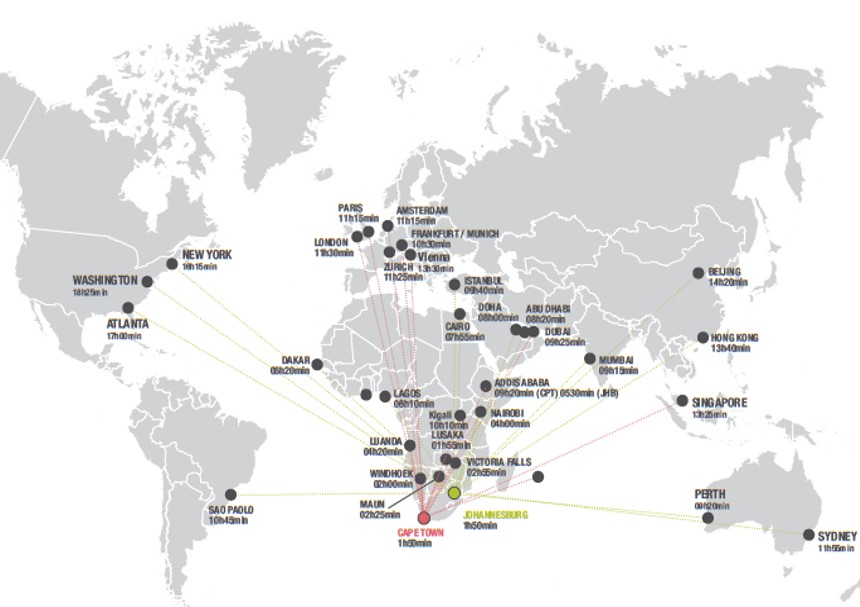
You may also fly to Cape Town from Johannesburg, Durban and other South African cities, with the following airlines: SA Airlink, Safair, Cemair. Depending where you wish to fly from, various charter flights are also available.
Getting Around Cape Town
Discover Transport
There are a few different ways to get around Cape Town, depending on your budget and needs. If you’re travelling on a tight budget, the best option is to use the bus system. Bus tickets are relatively cheap, and you can use them to get around the city quite easily.
- CAB OR TAXI – Visitors to Cape Town can make use of metered taxi cabs or ride-sharing services like Uber which are easy to find near the airport or major attractions in and around the city. Both options offer convenient transportation around the city to get to and from popular tourist destinations.
- CAR HIRE – Use local car hire companies to rent a car and explore the city on your own schedule. There are many rental companies to choose from, offering a range of vehicle sizes and classes. It is a convenient and flexible option to easily visit different parts of the city and popular tourist destinations.
- BICYCLE – Cape Town is a bike-friendly city with a variety of options for visitors looking to explore the city by bicycle. Several rental companies offer daily, weekly, or monthly rentals, as well as guided tours. The city also has an extensive network of dedicated bike lanes and routes, making for safe easy travel.
- TRAIN – Experience the breathtaking beauty of Cape Town by railway on the Southern Line. The city’s convenient and affordable trains will take you on a journey through the city, with multiple stations located throughout to make it easy to explore all that Cape Town has to offer.
- BUS – Cape Town has a number of private bus companies and commuter bus services, as well as the City Sightseeing bus. The City Sightseeing bus is an awesome way to see the city at your own pace as you jump on and off at your leisure. The MyCiti bus is another quick way to get around the city.
Cape Town’s Big Six Attractions
Cape Town is a city with unrivalled culture and diversity, boasting a mix of old and new. Nothing speaks to this more than the iconic Big Six attractions. They represent the beautiful nature, rich history, diverse culture, and incredible cuisine and wine that make Cape Town a top destination for travellers the world over.
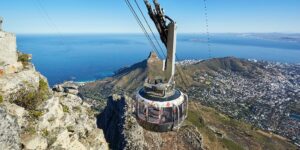 Table Mountain
Table Mountain is a World Heritage Site, and it’s easy to see why. The unique flora and fauna found on the mountain are like nothing else in the world, and there are numerous hiking trails to explore. The views from the top of Table Mountain are simply unbeatable. You can see for miles in every direction, and on a clear day you can even see all the way to Robben Island. The cable car ride up to the summit is an experience in itself. The state-of-the-art carriages take you up the mountain in style, and the views out over the city are stunning.
 Cape Point
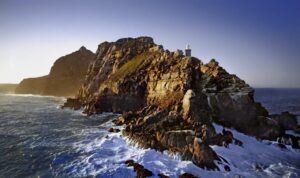
Cape Point Nature Reserve is a beautiful place with green hills, a rocky coastline and stunning views. The reserve is home to a variety of wildlife including baboons, Cape fur seals and birds. Within the reserve is the Cape Point lighthouse which was built in 1859. Visitors can take a cable car to the top of the lighthouse for panoramic views of the Cape Peninsula. Cape Point is a popular tourist destination and is well worth a visit.
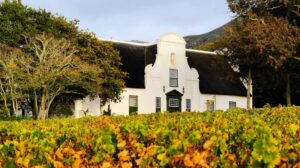 Groot Constantia
Groot Constantia is a great attraction in the Southern Suburbs of Cape Town. It is the oldest wine estate in South Africa and produces some of the finest wines in the country. The estate covers more than 300 hectares of land and includes a working vineyard, a cellars complex, a museum, a restaurant and a beautiful garden. Visitors to Groot Constantia can learn about the history of wine production in South Africa, tour the cellars and taste the estate’s award-winning wines.
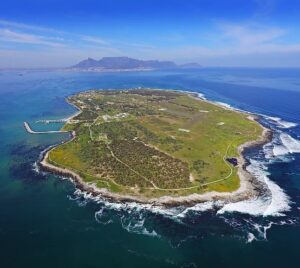 Robben Island
Robben Island is a small island located just off the coast of Cape Town, South Africa. For centuries it was used as a place of exile and imprisonment, and today it is best known as the site of Nelson Mandela’s incarceration. Today, Robben Island is a World Heritage Site and a popular tourist destination. Visitors can tour the prison where Nelson Mandela was held, as well as the island’s museum and lighthouse. The island also offers stunning views of Table Mountain and the surrounding ocean.
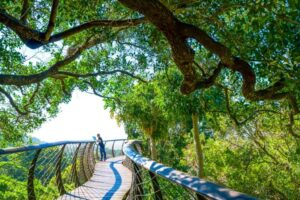 Kirstenbosch Botanical Garden
Kirstenbosch Botanical Gardens is widely regarded as one of the most beautiful gardens in the world. Nestled at the base of Table Mountain in Cape Town, Kirstenbosch covers over 528 hectares and is home to an incredible variety of plant life. The gardens are also a haven for birdlife, and there are several hiking trails that wind through the property. In addition, Kirstenbosch hosts a number of events throughout the year, making it a popular destination for locals and tourists alike. Whether you’re admiring the stunning flowers or taking a leisurely hike, Kirstenbosch is sure to delight and inspire.
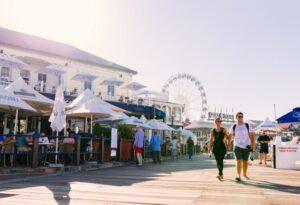 V&A Waterfront
The Victoria & Albert Waterfront in Cape Town is one of the most popular tourist destinations in South Africa. Situated on the Atlantic Ocean, it offers stunning views, a variety of shops and restaurants, and a busy calendar of events.
The Two Oceans Aquarium is a must-see for anyone visiting the waterfront, and the food markets are a great place to find fresh produce and local specialties. For those looking for a more traditional shopping experience, there are a number of shops selling African crafts and souvenirs.
The City of Cape Town is a diverse and fascinating city, made up of a number of different geographic areas, each with their own appeal. The skyscrapers and lively streetscape of the Central City are surrounded by various areas which offer a unique and beautiful mix of suburban and back-country, rich with natural scenery.
In addition, there are the popular tourist areas of Robben Island, the dramatic shores of the Cape Peninsula and the additional offerings beyond the city, which are popular for activities such as wine tasting in towns like Franshoek or Stellenbosch, or whale watching in Hermanus.
EXPLORE AREAS
Atlantic Seaboard
The Atlantic Seaboard is a beautiful stretch of coastline in Cape Town that is a popular destination for locals and tourists alike. The area is renowned for its stunning beaches, which are perfect for swimming, sunbathing, and surfing.
The boardwalk at Seapoint is a great place to take a leisurely stroll or go for a jog, and the restaurants and cafes in Camps Bay and Hout Bay offer a delicious selection of food and drink. The area is also perfect for exploring, with plenty to see and experience. Whether you’re looking to relax or adventure, the Atlantic Seaboard has something to offer everyone. offer everyone.
Central City
Cape Town’s Central City is a vibrant CBD which offers visitors so much more than just delicious food and great shopping. Long Steet in particular is a bohemian hangout with unique coffee shops, book stores, restaurants and artsy retailers.
Travelers and residents can roam from outlet to outlet or simply choose one setting to soak up the atmosphere around the city. There are so many places to explore in this part if town that will cater to any mood requirements.
Northern Suburbs
The Northern Suburbs of Cape Town provide nature lovers with an opportunity to explore some beautiful areas within close proximity to urban residential areas, from the trendy shops of Belville to relaxing wine tasting trips along the Durbanville route – these lush green belts make up for a perfect day trip from downtown city life!
This bustling urban area with plenty of green surrounds, is situated just outside the main hustle and bustle of the Cape Town CBD and has grown in popularity among Cape Town residents and visitors in recent years. For the more adventurous, Durbanville, also offers numerous mountain biking trails that caters to riders of all skill levels.
Southern Suburbs
Cape Town’s Southern Suburbs are a calm and tranquil oasis compared to the bustle of the city centre. With Kirstenbosch Gardens, Groot Constantia and Table Mountain trails and parks all within easy reach, it’s no wonder that this is a popular area to visit.
The Southern Suburbs offer a more relaxed experience, with plenty of opportunities for outdoor activities and relaxation. Whether you’re looking for a place to take a leisurely stroll or somewhere to enjoy some breathtaking views, the Southern Suburbs are well worth a visit.
Blaauwberg
Blaauwberg is a vibrant and happening suburb of Cape Town, which offers Bloubergstrand’s world-famous kiteboarding on some simply beautiful beaches, as well as stunning views of Table Mountain and Robben Island.
Blaauwberg also has a thriving nightlife scene, with a number of bars and clubs to keep you entertained into the early hours of the morning. If you’re looking for an exciting place to live or visit, Blaauwberg is definitely the place to be.
Cape Peninsula
The Cape Peninsula is a spectacular place. It is home to some of the most beautiful views in the world, and its dramatic coastline stretching to Cape Point is a nature lover’s dream. The peninsula is also home to several quaint towns, each with its own unique charm.
If you are looking for a place to escape the hustle and bustle of city life, the Cape Peninsula is the perfect destination. Whether you want to relax on the unspoilt beaches, explore the natural fynbos and it’s wildlife, or hike to the top of a mountain or breathtaking views, you will find everything you need in this magical part of Cape Town.
Helderberg
The Helderberg region of Cape Town is one of the most beautiful wine-producing areas in the world. Situated between the Somerset West and beautiful Sir Lowry’s Pass, the region is home to some of the finest vineyards in the country. The scenery is breathtaking, with rolling hills, lush valleys and the majestic Hottentots Holland Mountains towering in the distance. The climate is not only perfect for producing some of the best in South Africa, but also for offers warmer Indian ocean waters inviting.
Beyond the City
Just beyond the city of Cape Town lie the Cape Winelands, a verdant region renowned for its wines. The Winelands are home to Paarl, Franschhoek, and Stellenbosch, three picturesque towns that offer visitors a taste of mixed Dutch, French and German traditions.
The rolling hills and vineyards of the Cape Winelands are a beautiful sight, and there are plenty of opportunities to sample the local wines. Whether you’re enjoying a glass of Chenin Blanc from Paarl or exploring the historic wine estates of Stellenbosch, the Cape Winelands offer a unique and memorable experience.
Every visitor to South Africa must have a valid passport.
- Passengers travelling to South Africa must be in possession of a passport with two unused pages required for endorsements.
- Two unused pages when presented for purposes of endorsing a port of entry visa, visa, permanent residence permit, or entry of departure stamp.
- The passport must be machine readable however, the foreigner may be admitted into or depart from South Africa with a non-machine-readable passport provided that:
- He or she is from a foreign country that is issuing machine readable passports and has not completely phased out the non-machine-readable passports; and
- Passports must be valid for at least 6 months after your intended date of departure.
Passport holders from more than 80 countries, including USA, Canada, UK, Japan, and the EU can visit South Africa without a visa. A list of countries that currently do not require a visa can be found at the South African Government website.
Information regarding visas can be obtained from your travel agent or the South African diplomatic or consular representative in your area. Delegates requiring visas, and who intend taking tours to neighbouring Southern African countries, are advised to secure a multiple entry visa. Tourists must satisfy immigration officers that they have the means of support for the duration of their stay in the country and return /onward tickets.
Key Visa-Free/Visa-on-Arrival Regions for South Africans (2026):
- Africa: Botswana, Lesotho, Mauritius, Seychelles, Tanzania, Kenya, Angola, Benin, Cape Verde, Ghana, Mozambique.
- Asia: Thailand (30 days), Singapore (30 days), Indonesia (30 days), Qatar, South Korea, Macau, Hong Kong.
- Americas: Argentina, Brazil, Bahamas, Barbados, Antigua and Barbuda, Belize, Bolivia, Costa Rica, Guyana
- Europe: Georgia, Kosovo, Russian Federation.
- Middle East: Israel, Saudi Arabia, Jordan
Visas cannot be obtained on arrival.
Click here to view the visa requirements to enter South Africa.
On entry to South Africa, a visa is considered to be a visitor’s permit. The permit’s period of validity is calculated from the date of entry into the country and will be set out under the heading “conditions” on the visa label.
Please ensure that you apply for the correct visa/permit. Entry into the country may be refused if the purpose of the visit was not correctly stated. Requirements for visitor visas differ from country to country (click here to see which countries are currently exempt), and the requirements are subject to change.
Please ensure that you apply for the correct visa/permit. Entry into the country may be refused if the purpose of the visit was not correctly stated. Requirements for visitor visas differ from country to country (click here to see which countries are currently exempt), and the requirements are subject to change. Each application is treated individually. You should make an appointment with your nearest South African consulate. There is a fee charged for processing a visa, so you should check beforehand what this will be (it differs from country to country.) The fee is payable in different currencies in different countries.
Foreigners with work permits or permit residence) in neighbouring countries who transit through South Africa to their places of employment or residence are not subject to the transit visa, provided they are in possession of proof of their status.
South African visitors’ visas may be granted for:
- Visits to family or friends and also for tourism purposes
- Business purposes
- Joining a spouse who is in South Africa on a work or study permit
- Children to join parents who are in South Africa on work or study permits
- Fiancée/ fiancé to join his or her partner
- Study purposes (max stay 3 months)
- Charitable or voluntary activities
- Research
- Conferences
- To work in the production of a movie or show
We are in the process of negotiating special rates for the Congress.
More information on booking accommodation will be available soon.
We are in the process of negotiating special rates for the Congress.
More information on booking accommodation will be available soon.
HOW TO TRAVEL WISE IN CAPE TOWN
Download the guide to navigating safely in our beautiful city.
Like many major cities, Cape Town has both good and bad areas. It is advisable when walking in Cape Town, particularly at night, that you should be aware of people around you and that ideally you should not walk alone but in a group. Highly visible displays of wealth should be avoided, and it is not advisable to look like a ‘typical tourist’ with cameras and binoculars strung around your neck. Never leave any valuables unattended.
In General
- Do not carry a camera openly in the city. Please take care when using your camera, as this will identify you as a tourist and could draw unnecessary attention.
- Avoid wearing jewellery and expensive watches.
- If you are accosted, remain calm and be cooperative.
- Be extra vigilant when drawing money from a bank machine (ATM) and never accept assistance when transacting at an ATM.
When on Foot
- Carry your handbag across your body.
- Do not carry large amounts of cash on you.
- Do not leave valuables exposed (e.g. on a seat or the floor or ground) while having a meal or drink.
- Do not let strangers get too close to you, especially people in groups.
On the Road
- Lock your car doors.
- Never leave anything worth stealing in view when driving or when your car is unattended.
- Preferably use the air-conditioning or cooling system in the car to avoid opening your windows.
- Be vigilant when stopped at a traffic light or Stop street.
Emergency Contacts
- Corné Engelbrecht +27(0)82 925 9241
- FM 24 Hour Ops Centre +27 (0)21 808 2333
- Ambulance 10177/999
- Fire and Rescue services +27 (0)21 808 8888/+27 (0)21 887 1333
- Hospital: Medi-Clinic +27 (0)21 861 2000
- Campus Health Services +27 (0)21 808 3494/5
- Police 10111/021 809 5000
Safety Information
- Avoid carrying large sums of cash, don’t carry cameras in plain sight and do not leave belongings unattended.
- Heed the advice of your hosts, Cape Town Tourism Visitor Centre staff, or locals on where to go after dusk. Avoid walking in deserted and dark places at night. Park in a secure, well-lit area with street guards.
- Never allow strangers to assist you in any way at ATMs or cash points.
- Street children and beggars may approach you for a handout. If you wish to help, consider giving food, donating to a registered charity or contact Cape Town Tourism for advice.
- Keep copies of all valuable documents in a safe place.
- When exploring Table Mountain National Park, take a map, comfortable walking shoes, a few friends and a charged mobile phone.
- When hiking, be prepared for weather that can change rapidly, even in summer. Bring along enough water and sunblock, as well as something warm to wear. Start heading back well before dark and don’t venture away from the demarcated paths. Tell a friend or your host where you are going and when you expect to be back.
- Load the Table Mountain National Park emergency number +27(0)861 106 417 into your mobile phone before departing on a hike. Cape Town Tourism and Protection and Emergency Services run a Visitor Support Programme to assist you, should you be involved in any incident during your stay.
